
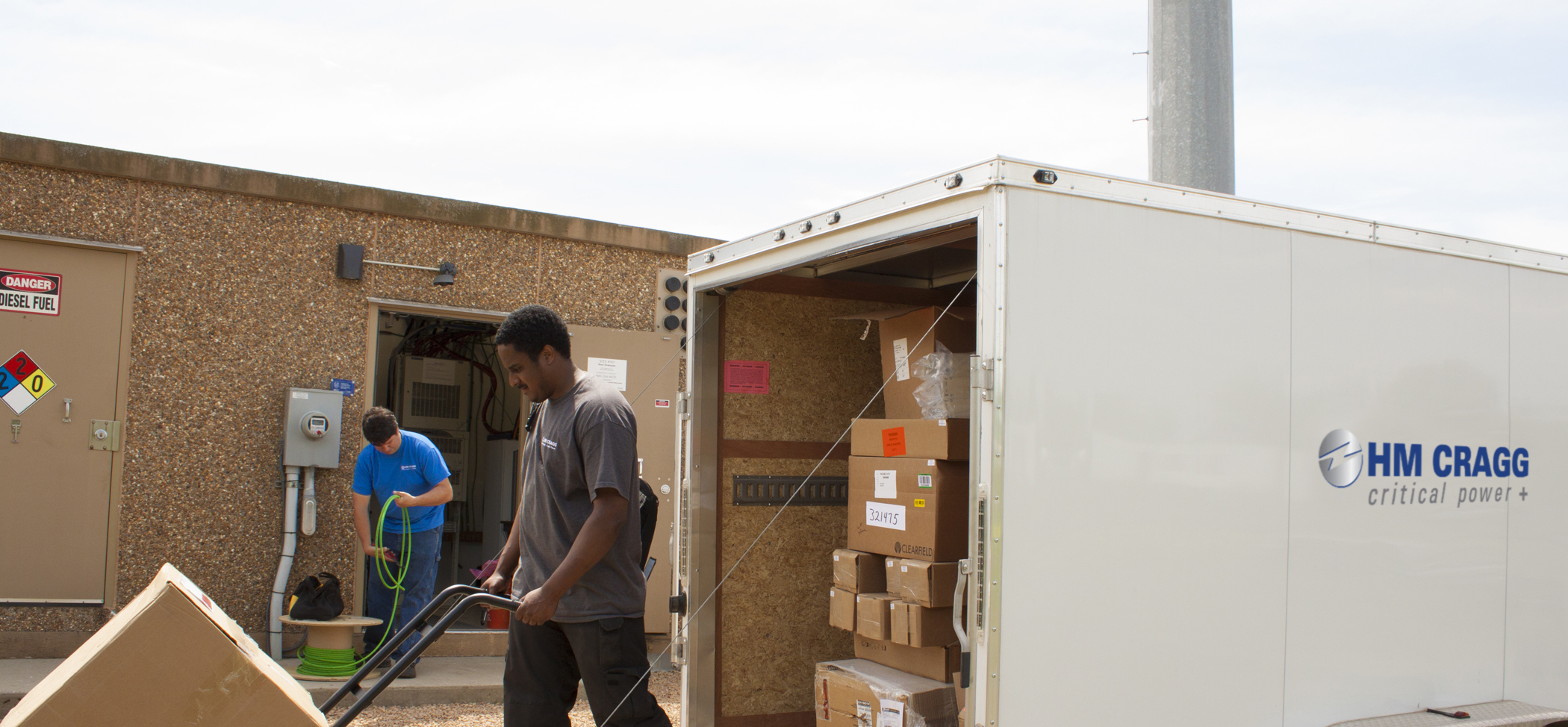
Prepare for Everything
HM Cragg has the service team and resources to support your ongoing backup power needs. From installation to maintenance to technical support, we are here to ensure your systems are operating effectively and reliably. With a strong Safety Program and culture, you can count on us to do the work professionally and safely.
Our service divisions cover the following markets:
Backup Power for Data Centers
Protecting data means preparing for every possible scenario. Our backup battery services are ideal for data centers, as we can scale up our solutions as your facility needs change. Whether your data center is used primarily for internal or external applications, we have the expertise and equipment it takes to keep your operations up and running.
Some of our service offerings for data centers include:
- Battery Installation & Removal
- UPS Service Contract Maintenance
- Battery Recycling & Disposal
Services for Telecom
In the telecom industry, reliability is key. To ensure predictable network operations, it takes sophisticated battery backup technology. Our experience working with telecom applications, including Telcordia trained technicians, ensures a seamless backup solution for your unique needs.
Our telecom battery backup services:
- Battery Installation & Removal
- Power Plant Upgrades
- General Installation
- Telecom Maintenance
- Battery Recycling & Disposal
Services for Utilities
Keeping utility infrastructure up and running is a customer expectation, but it’s impossible to do so without the right equipment and services. Our battery backup solutions add predictability to utilities.
Our experienced team can assist with:
- Battery Installation & Removal
- Grounding Systems
- Switchgear & Control
- Battery Recycling & Disposal
Generators
No matter your industry, a generator can add value and predictability to your operations or services. Unexpected events like extreme weather can leave a business in a tough situation. Our dependable generators make it easy to get proactive with your operations.
Integrated Power Services
Plan an all-in-one power solution for your business. We tailor our integrated power services to meet the needs of your business, accounting for nearly every possible scenario. See how our experts can help you change the way you plan for the future.